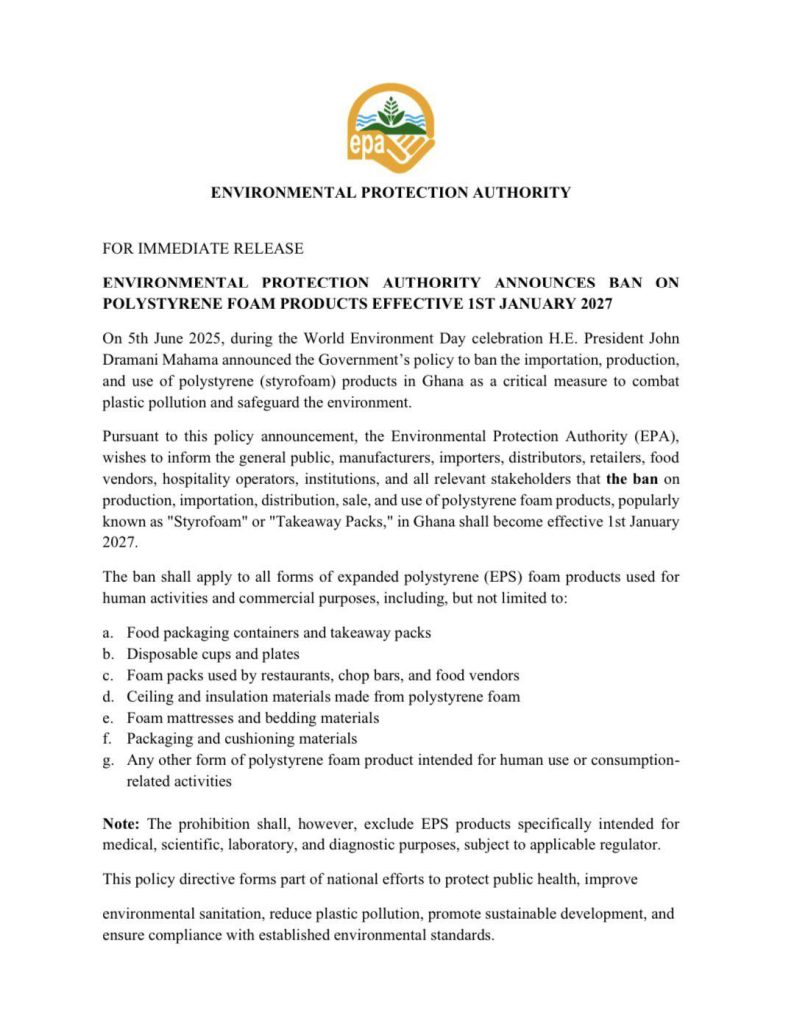


The Environmental Protection Authority has announced that all styrofoam products, also known as takeaway packs or foam containers, will be banned in Ghana starting from January 1, 2027.
This new policy means that the production, importation, sale, distribution, and use of styrofoam products will no longer be allowed across the country.
The decision follows an earlier announcement made by John Dramani Mahama during the 2025 World Environment Day celebration on June 5. At the event, the President explained that the government plans to stop the use of styrofoam in order to reduce plastic waste and protect the environment.
In a statement released on Monday, May 25, the EPA explained that the ban will affect all expanded polystyrene (EPS) foam products used in homes and businesses.
Some of the products that will be affected include:
- Takeaway food containers
- Disposable cups and plates
- Foam packs used by restaurants, chop bars, and food sellers
- Foam ceiling and insulation materials
- Foam mattresses and bedding items
- Packaging and cushioning materials
- Other styrofoam products used for food and daily activities
However, the EPA said some styrofoam products used in hospitals, laboratories, medical services, and scientific work may still be allowed after approval from regulators.
According to the Authority, the move is part of Ghana’s efforts to improve sanitation, protect public health, reduce plastic pollution, and support environmental sustainability.
The EPA also stated that the period before the 2027 deadline will be used to educate the public, engage stakeholders, and hold technical discussions across the country. During this time, the Authority will also prepare for strict monitoring and enforcement of the new rules.
Manufacturers, importers, distributors, food vendors, and users of styrofoam products have been advised to start using reusable, recyclable, and environmentally friendly packaging options before the ban takes effect.
The EPA added that it will work together with Metropolitan, Municipal and District Assemblies, port authorities, customs officers, and other industry regulators to ensure the policy is properly enforced nationwide.
The Authority also encouraged the public to support the initiative by choosing safer and eco-friendly packaging materials to help protect the environment for future generations.